





















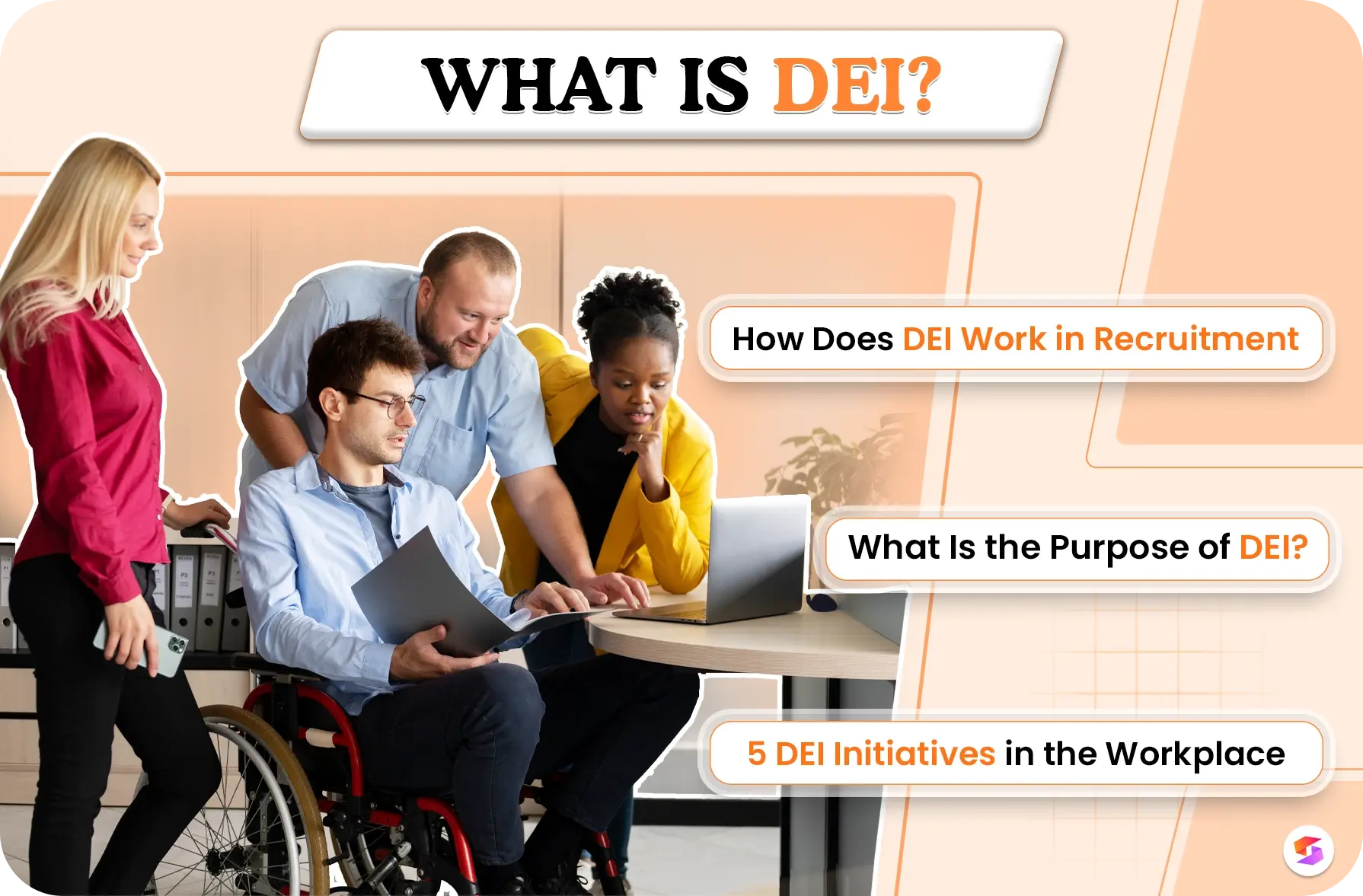
- DEI (diversity, equity, and inclusion) is a workplace strategy that ensures diverse representation, fair opportunities, and an inclusive environment where employees feel valued.
- A well-defined DEI policy turns intent into action by setting clear standards for hiring, pay equity, accountability, and measurable progress across the organization.
- Embedding DEI in recruitment through inclusive job descriptions, diverse sourcing, blind screening, and structured interviews reduces bias and improves hiring quality.
- High-impact DEI initiatives like ERGs, pay equity audits, mentorship, and transparent promotions directly improve retention, engagement, and leadership diversity.
- Most DEI efforts fail due to poor execution; treating DEI as a shared business responsibility with data tracking and accountability is essential for long-term impact.
Corporate investment in DEI remains substantial and continues to grow, even as public debates fade. McKinsey estimated the global DEI market at $7.5 billion in 2020, forecasting it will exceed $15.4 billion by 2026.
However, mentions in S&P 500 10-K filings fell from 12.5 in 2022 to just 4 in 2024. Still, 76% of U.S. employees see diverse workforces as vital. This guide explains DEI meaning, policy, and hiring effects, enabling leadership to transform it into a concrete business asset.
What Is DEI and Why Is It Important?
DEI stands for Diversity, Equity, and Inclusion. It involves the proactive strategies and systems organizations implement to ensure their workforce reflects diverse backgrounds and that everyone has equal opportunities for success.
Each pillar carries a distinct meaning:
- Diversity means representation. It reflects the variety of individuals present across race, gender, age, disability, sexual orientation, religion, and socioeconomic background.
- Equity fosters fairness in access and processes. It acknowledges varied starting points and seeks to eliminate structural barriers, ensuring outcomes are independent of one's identity.
- Inclusion signifies belonging. It’s about individuals truly feeling respected, heard, and valued, rather than simply being employed.
Why DEI Matters Beyond the Optics
Companies with significant racial and ethnic diversity in leadership are 36% more profitable than those with minimal diversity. They are also 1.7 times more likely to be market innovation leaders.
This emphasis on inclusivity affects how talent views them. 63% of employees prioritize DEI programs when choosing employers. Among Gen Z, that rises to 73%. Over 60% of job seekers want relatable employees at their companies.
What Is a DEI Policy?
A DEI policy is a formal document that translates your DEI philosophy into specific expectations and responsibilities. It aligns with your code of conduct and helps leaders make informed decisions regarding personnel matters.
In practical terms, a modern DEI policy usually:
- Defines Key Concepts: diversity, equity, inclusion, harassment, discrimination, retaliation, and characteristics that are legally protected.
- States Commitments: Include fair hiring and promotion, pay equity reviews, accessible workplaces, and a zero-tolerance policy for harassment and discrimination.
- Clarifies Responsibilities: Defines roles and expectations for the board, executive team, HR, people managers, and employees within the organization.
- Outlines Processes: The process for reporting, investigating, and resolving complaints; requesting reasonable accommodations; and managing data effectively.
- Links to Governance and Metrics: Progress in DEI will be assessed, reported, and connected to the performance of executives and managers.
PwC's DEI survey reveals that despite significant investments, only 4% of organizations excel in key DEI areas. A DEI policy aligns legal, ethical, and business goals, serving as a vital decision-making tool for leaders.
What Is the Purpose of DEI?
The purpose of DEI is to create workplaces with broader opportunities, fair treatment, and fewer employee barriers. For founders and HR, this often results in better talent attraction, improved retention, enhanced decision-making, and a thriving culture.
Here's what DEI actually does when it works:
1. Risk and Compliance
To minimize discrimination claims and regulatory violations, standardize fair processes and documentation. Although most workers recognize fair policies, perceptions differ significantly among demographic groups, particularly Black workers. DEI initiatives address this perception gap.
2. Performance and Innovation
Research indicates that companies with diverse executive teams experience better financial performance. To enhance innovation and revenue generation, organizations should prioritize building inclusive leadership and fostering diversity within their teams.
3. Talent Attraction and Retention
Glassdoor's survey highlights the importance of a diverse workforce. To enhance retention, companies must actively address discrimination, creating an inclusive environment that goes beyond mere recruitment efforts.
4. Culture, Trust, and Employer Brand
Organizations that prioritize inclusivity and fairness enhance employee advocacy and referrals, expanding their talent pools. Even as some leaders retreat from DEI discussions, employees remain committed to supporting fair practices in their everyday interactions.
When politics are set aside, DEI's goal is clear: cultivate a workforce that mirrors market demographics, eliminate obstacles for peak performance, and safeguard the organization from self-imposed risks.
How Does DEI Work in Recruitment?
Recruitment is crucial for DEI. An inclusive workplace is ineffective if the hiring process eliminates diverse candidates. Fairness must be integrated into every stage of recruitment, beyond just job postings.
Stage 1: Job Descriptions
HBR found women apply for jobs only if they meet 100% of the criteria, while men apply at 60%. Rigid job descriptions limit female applicants. To address this, use gender-neutral language, remove unnecessary qualifications, and focus on defining the role's success.
Stage 2: Sourcing
Exclusively posting on mainstream job boards restricts your candidate diversity. To enhance DEI sourcing, engage with HBCUs, community colleges, disability-focused job boards, and professional affinity groups, thus widening your applicant pool.
Stage 3: Resume Screening
Blind hiring eliminates personal identifiers such as name, gender, and age from resumes during initial screening, effectively reducing bias. Many ATS platforms offer this feature; if yours doesn't, explore third-party tools.
Stage 4: Interviews
Unstructured interviews are often unreliable predictors of job performance and are prone to bias. Structured interviews, which use consistent core questions and diverse interview panels, reduce subjectivity and demonstrate a commitment to fairness and inclusivity.
Stage 5: Offers and Onboarding
Equitable hiring goes beyond the offer stage. By sharing salary ranges upfront and ensuring fairness, pay equity gaps can be addressed from the beginning. Onboarding should also consider various learning styles and accessibility needs.
Step 6: Tracking What Matters
Data-driven DEI focuses on analyzing the diversity within the candidate pool, the rate of diverse hires, and where overlooked candidates exit the hiring process. Bias appears in screening if some candidates advance less despite equal applications.
5 DEI Initiatives in the Workplace
DEI adds value through initiatives that enhance hiring quality, guarantee fair evaluations, and foster inclusive environments, allowing employees to contribute effectively.
Here are 5 initiatives that genuinely make an impact beyond mere discussion:
1. Employee Resource Groups (ERGs)
Employee Resource Groups (ERGs) unite individuals with shared identities, including women in tech and LGBTQ+ members. Approximately 74% of global organizations establish these groups to enhance connections and provide support.
When ERGs receive adequate resources and are aligned with business strategies, they serve as powerful avenues for mentorship, feedback, and leadership growth.
2. Pay Equity Audits
Pay equity addresses compensation disparities. A pay audit evaluates salaries based on gender, race, role, and tenure to find unexplained gaps in performance. In 2023, women in full-time roles earned 83.6 cents for every dollar men earned.
Many companies remain unaware of their internal gaps until they measure them. Regular pay audits and published salary ranges are vital DEI actions organizations can implement.
3. Bias Training Done Right
Most bias training fails as a one-time event. Participants return to their desks, repeating old decision-making patterns. Effective training is ongoing, scenario-based, and linked to real hiring and performance choices.
Interactive workshops and case studies enable team members to identify and address biases in practical situations. Combining training with structural changes like rubrics, blind reviews, and diverse panels ensures lasting impact.
4. Mentorship and Sponsorship Programs
Mentorship offers guidance, but sponsorship provides opportunities. For underrepresented employees, having a senior leader advocate for them is vital. Every company on Fair360's Top Companies for Diversity list has mentoring initiatives.
Structured programs that connect junior diverse employees with senior leaders boost higher-level representation. Without focused efforts, those who get sponsored often mirror the sponsors themselves.
5. Transparent Promotion Criteria
Ambiguity in promotion decisions negatively impacts underrepresented groups. When "potential" varies among individuals, advancement gaps emerge. Implementing clear criteria based on skills, impact, and measurable outcomes can limit bias.
Managers should receive training for uniform performance evaluations, while HR must examine promotion decisions for demographic trends. Women’s promotion rates decreased from 87 per 100 men in 2023 to 81 in 2025, emphasizing the need for intentional progress.
5 Common DEI Mistakes to Avoid
DEI initiatives often struggle due to flawed implementation. Below are 5 common challenges and effective ways to overcome them:
1. Treating DEI as an HR Problem
When DEI is solely an HR initiative, it seldom gains traction. Hiring managers make decisions, finance determines compensation, and leadership shapes culture. For real progress, accountability must extend across the entire organization.
2. Hiring for Diversity Without Building for Inclusion
Incorporating diverse talent into an unchanged culture risks losing them quickly. Without support, diverse hiring becomes superficial. Prioritize psychological safety and inclusive practices to improve retention before turnover occurs.
3. One-Time Training as a DEI Strategy
Annual DEI training alone fails to change behavior; it merely gives an illusion of effort. Continuous training with practical scenarios and structural reforms, like diverse panels, is vital to ensure the right choices become standard practice.
4. No Measurement, No Accountability
Only 28% of companies hold their C-suite accountable for DEI progress. Without ownership, issues persist. Set specific, trackable goals for representation, promotions, pay gaps, and diversity. Review quarterly, publish internally, and tie accountability to leadership.
5. Over-Relying on Referrals
Referral hiring can seem efficient, but it often reinforces team homogeneity. Balance referrals with diverse sourcing. If referrals yield less diversity, use that insight to broaden your hiring channels without completely discarding referrals.
Summary
DEI diversity, equity, and inclusion go beyond politics; they aim to create a workforce reflecting your markets. Companies with diverse leadership teams tend to be more innovative and financially successful.
Founders and recruiters, it's essential to define DEI in your context, establish clear policies, integrate it into hiring processes, and measure it consistently. In a talent market that values fairness, those who effectively prioritize DEI will build stronger teams and achieve better results.
Frequently Asked Questions
1. What is the definition of DEI?
DEI stands for diversity, equity, and inclusion. It is a workplace framework focused on fair access, representation, and inclusive environments where all employees can participate, grow, and contribute without bias or systemic barriers.
2. What does DEI stand for?
DEI stands for Diversity, Equity, and Inclusion. In hiring and HR, it refers to practices that support fair treatment, broader representation, and a more inclusive employee experience.
3. What is the DEI policy?
A DEI policy is a company’s formal guideline for supporting diversity, fairness, and inclusion in hiring, promotion, leadership, and workplace behavior. It helps set expectations and accountability.
4. What is a DEI program?
A DEI program is a set of planned initiatives that improve representation, inclusion, and fairness at work. It may include training, hiring process changes, employee listening, and leadership development.
5. Who is included in DEI?
DEI includes all employees, candidates, and teams, with special attention to people who may face barriers because of background, identity, disability, or experience. It aims to support everyone fairly.